Spray Foam Insulation in Queen Creek, AZ
The highest R-value per inch and a true air seal in one step — the strongest defense against a Queen Creek attic that hits 150°F every summer afternoon.
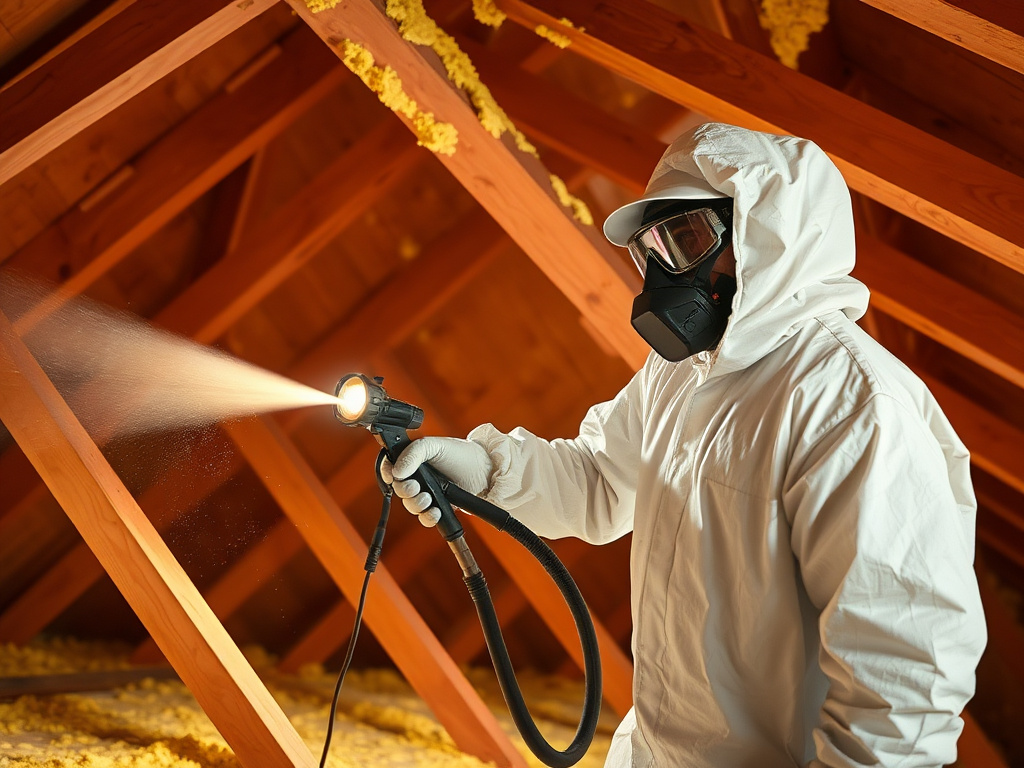
When a Queen Creek roof deck bakes to 140-160°F under the July sun, every gap, crack, and thin spot in your attic becomes a pathway for that heat to pour straight down into your living space. Spray foam is the only insulation product that insulates and air-seals in a single application, expanding to fill every crevice around wiring, plumbing, and framing so hot attic air simply has nowhere to get in. For East Valley homes fighting a five-month cooling season, that combination of R-value and an airtight seal is what actually moves the needle on comfort and your SRP or APS bill.
We install both open-cell and closed-cell spray foam, and we don't default to the most expensive option just because it exists. Whether you're finishing a garage ceiling, sealing a vaulted ceiling, insulating a room over the garage, or upgrading a full attic, we match the product to the application so you get real performance without paying for capability your home doesn't need.
Why homeowners choose it
- The highest R-value per inch of any common insulation product
- Air-seals and insulates in a single application — no separate air-sealing pass required
- Stops hot attic air and AC-cooled air from trading places through gaps and cracks
- Won't sag, settle, or compress the way loose-fill and batts can over time
- Strengthens the roof deck assembly and cuts dust infiltration from the attic
- Excellent for hard-to-insulate spaces like garage ceilings and vaulted rooflines
Open-cell vs. closed-cell spray foam in a dry desert climate
Open-cell and closed-cell foam do different jobs, and the right call in Arizona isn't always the same as it is in a cold or humid climate. Open-cell foam is lighter, expands more per board foot, and delivers a strong air seal at a lower cost per square foot — which is exactly why it's often the smarter value pick for a Queen Creek attic. Closed-cell foam costs more, delivers a higher R-value per inch, and adds real structural rigidity, but its signature advantage — acting as a moisture and vapor barrier — matters far less here than it does in a humid or freeze-thaw climate. Arizona's dry heat means moisture intrusion simply isn't the driving concern it is elsewhere.
That said, closed-cell still earns its place in specific spots: garage ceilings under living space, band areas prone to monsoon-driven wind-blown rain, and anywhere structural rigidity adds real value. We assess each part of your home rather than pushing one product everywhere, so your budget goes toward the performance that actually matters for your attic.
- Open-cell — strong air seal, lower cost, the value pick for most AZ attics
- Closed-cell — highest R-value per inch, adds rigidity, best for targeted spots
- AZ's dry climate reduces the need for closed-cell's moisture-barrier advantage
- We spec each area on its merits, not a one-size-fits-all pitch
Why spray foam matters when your attic hits 150°F
A Queen Creek attic isn't just warm — on a July afternoon the roof deck can measure 140-160°F, and that heat radiates and conducts downward all day and into the evening. Every unsealed gap around a top plate, recessed light, or plumbing penetration lets that superheated attic air migrate into your ceiling cavity and living space, forcing your AC to run nonstop just to keep up. Because spray foam insulates and seals at once, it attacks both problems together — slowing the conductive heat transfer through the roof deck while also cutting off the air pathways that let hot air infiltrate your home. That's why homes with spray-foamed attics or roof decks consistently report the biggest drop in afternoon AC runtime and the most even room-to-room temperatures.
It also pays off in a dry, dusty climate: a sealed attic keeps more of Queen Creek's fine desert dust and monsoon-season debris out of your ductwork and living space, which most homeowners notice within the first few weeks.
A clean, professional installation built for extreme heat
Spray foam has to be installed at the right thickness, ratio, and substrate temperature to cure properly and perform for the life of the home — and Arizona's attic temperatures make that discipline even more important than in a mild climate. Our crews mask and protect the work area, verify conditions before spraying, apply foam to spec, and trim and clean up so the finished job is ready for whatever comes next, whether that's drywall, ductwork, or simply closing up the attic hatch. Correct installation is the difference between foam that performs for decades and foam that underdelivers, and it's what separates a professional crew from a weekend applicator.
Ideal for
- Attics and roof decks losing the fight against 150°F summer heat
- Vaulted or cathedral ceilings with limited insulation depth
- Rooms over garages and additions that never cool down
- Homeowners who want the maximum efficiency upgrade available
- Garage ceilings shared with living space above
What affects the cost
Spray Foam Insulation questions, answered
For attics, roof decks, and rooms over garages, yes — spray foam's combination of high R-value and a built-in air seal directly targets the two things that make Queen Creek attics unbearable: conductive heat through the roof deck and hot air infiltrating through gaps. Most homeowners notice a real drop in afternoon AC runtime and a more even house within the first summer.
For most Queen Creek attics, open-cell is the better value — it delivers a strong air seal and good R-value at a lower cost, and Arizona's dry climate doesn't demand closed-cell's moisture-barrier advantage the way a humid climate would. We still recommend closed-cell for specific spots like garage ceilings and rigidity-sensitive areas.
Insulation and air-sealing upgrades frequently qualify for SRP and APS rebate programs, and spray foam projects can be part of that. The exact amount depends on scope and measured improvement — we'll walk you through what's currently available and help with the paperwork.
Yes. Once properly installed and fully cured, spray foam is inert and safe. Correct ratio, thickness, and cure time — done by a trained crew — is what ensures a clean cure, which is exactly why professional installation matters, especially in Arizona's high attic temperatures.
Spray Foam Insulation done right, by a local Queen Creek crew
Spray Foam Insulation isn't a commodity — the result depends entirely on how carefully it's planned and installed for your specific home and Arizona's extreme summer heat. We assess what your house actually needs, prep the space properly, and install to your target R-value, so the work delivers the comfort and cooling savings it's supposed to. No shortcuts, no builder-grade rush.
We serve Queen Creek, San Tan Valley, Gilbert, Chandler, Mesa, Sun Lakes, Coolidge, and Florence, and we'll help you capture the APS and SRP rebates that bring your project cost down. Every job starts with a free, no-pressure quote.
Just as important, we treat your home like the system it is. Insulation, attic ventilation, and radiant heat control all interact, and getting one right while ignoring the others leaves comfort and savings on the table. When we scope your spray foam insulation, we look at how it fits the whole picture — so the finished result performs the way it should, holds up through triple-digit Arizona summers, and actually lowers the cooling bill you feel every month. That whole-home mindset, plus honest advice about what your house truly needs, is what our neighbors across the East Valley count on us for.
Free assessment
We evaluate your home and give you a clear, itemized quote with rebates factored in.
Expert install
We prep and install your spray foam insulation to spec — clean and on schedule.
Savings you can feel
A cooler home, lower cooling bills, and help claiming every rebate you qualify for.
Related services
Ready for a free spray foam insulation quote?
Tell us about your home and we'll put together a clear, no-pressure quote — plus show you which APS and SRP rebates you qualify for.