Blown-In Insulation in Queen Creek, AZ
Loose-fill cellulose or fiberglass that fills a Queen Creek attic evenly and fast — the most affordable way to hit Climate Zone 2's R-38-R-49 target.
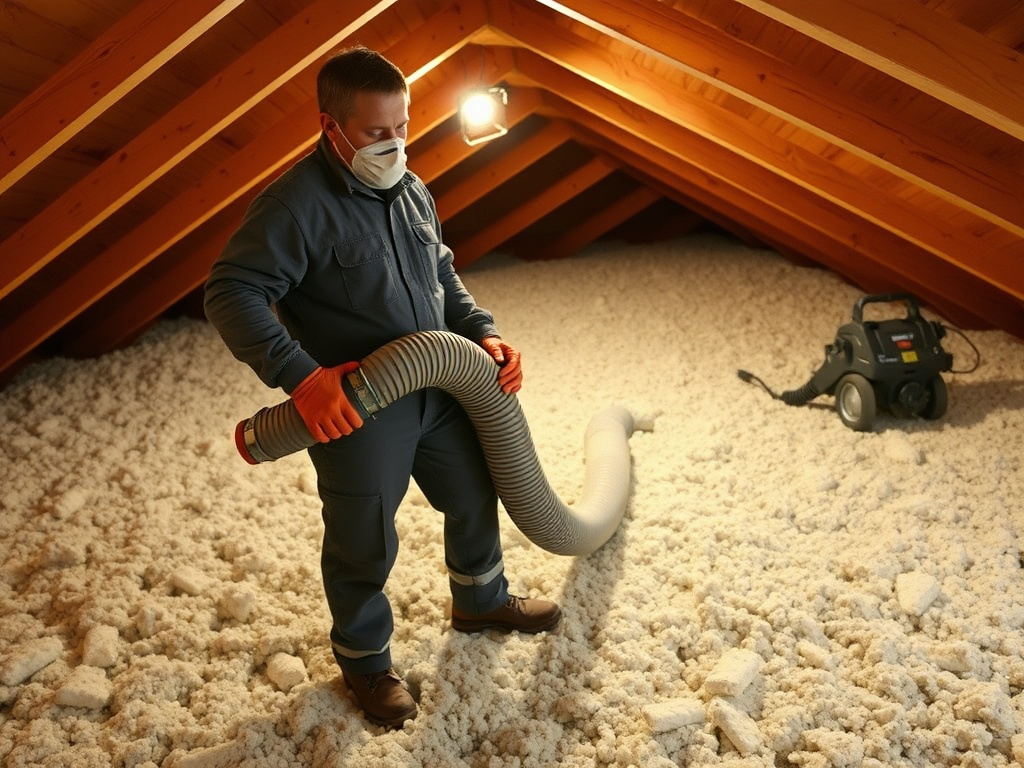
Blown-in insulation is the fastest, most affordable way to bring an East Valley attic up to modern standards. Loose-fill cellulose or fiberglass is blown through a hose to fill the attic floor, flowing around wiring, plumbing, and framing to create an even, gap-free blanket with none of the compression problems that plague old, worn-down batts. For attics — the single biggest source of heat gain in a Queen Creek home — blown-in is the go-to way to reach the R-38 code minimum, and ideally the R-49+ recommended for Arizona's Climate Zone 2 desert heat. A typical attic can be blown in a single day, with minimal disruption to the rest of the house.
Because it's a loose fill, blown-in reaches into eaves, corners, and irregular framing that rigid batts simply can't cover, eliminating the gaps that let 150°F attic air conduct straight through into your ceiling. It's the ideal upgrade for existing homes across San Tan Valley, Gilbert, and Mesa where the original insulation has settled, thinned, or was undersized to begin with — and it's routinely the single most cost-effective project we quote for a hot, under-insulated attic.
Why homeowners choose it
- Even, gap-free coverage that flows around obstructions and irregular framing
- Fast installation with minimal disruption to your home
- The most cost-effective way to top off an under-insulated attic
- Cellulose option is made largely from recycled, fire-treated content
- Great R-value gained per dollar spent
- Ideal for topping off old, settled insulation without a full tear-out
Cellulose vs. fiberglass loose-fill for desert attics
Both materials perform well in a Queen Creek attic; the right choice depends on your priorities. Cellulose is made largely from recycled paper, treated for fire resistance, and packs densely — a real advantage during monsoon season when wind-driven dust and debris can find their way through attic vents. Loose-fill fiberglass is lightweight, resists moisture, and settles less over time, which matters in a climate with big day-to-night temperature swings. For deep attic blankets aimed at R-49, we often recommend cellulose for its density; for certain vent and access configurations, fiberglass is the better fit.
Cost and coverage rate also factor in. Cellulose typically achieves a given R-value with slightly less material by volume, while fiberglass can be blown faster in attics with generous access. Neither material is a wrong choice on its own — the mismatch comes from using the wrong one for your attic's specific venting, access, and depth requirements, which is exactly what we assess before recommending either.
We'll walk through the trade-offs for your specific attic and recommend the material that delivers the most performance for your budget.
- Cellulose — dense, recycled, fire-treated, handles monsoon dust well
- Fiberglass — lightweight, moisture-resistant, low settling
- Both reach R-38-R-49 attic targets efficiently
- We match material to your attic's access and venting
Hitting Climate Zone 2's R-38-R-49 attic target
Queen Creek sits in Climate Zone 2 — hot, dry desert — where code requires a minimum of R-38 in attics, and we recommend R-49 or higher given how extreme summer heat gain really is here. Many East Valley homes, especially those built before the last couple of code cycles, were insulated to R-19 or R-30 and have settled even further since. Blowing in additional loose-fill to close that gap is consistently one of the highest-return improvements a Queen Creek homeowner can make, often paying for itself through lower summer SRP or APS bills within a few years.
We measure your existing depth, calculate exactly what's needed to reach your target R-value, and install to a documented, even depth with a ruler card left in the attic so the result is verifiable.
Prep comes first — and rodent damage is common here
Blown-in insulation performs best over a properly prepared attic floor. Before adding material, we check for air leaks around can lights, top plates, and penetrations, because insulation slows heat but doesn't stop air movement on its own. We also inspect for the rodent activity that's common in East Valley attics — droppings, nesting, and compressed or soiled insulation are signs that removal, not a simple top-off, is the right move. Skipping this inspection is how homeowners end up blowing new insulation over a contaminated attic and wondering why the smell doesn't go away.
Where access allows, we also check that soffit vents aren't blocked by existing insulation, since proper attic ventilation works together with insulation depth to keep the space from trapping even more heat than it needs to.
Ideal for
- Attics under-insulated or below Climate Zone 2's R-38 code minimum
- Older Queen Creek, Mesa, and Gilbert homes with settled or thin insulation
- Homeowners wanting the highest-ROI efficiency upgrade available
- Sloped ceilings and irregular attic geometry
- Homes where a full attic tear-out isn't needed or wanted
What affects the cost
Blown-In Insulation questions, answered
Queen Creek sits in Climate Zone 2, where code requires a minimum of R-38 in attics, and we generally recommend R-49 given how extreme summer heat gain is here. Many existing homes fall well short of that. We measure your current depth and top up to your target R-value, which for most under-insulated attics delivers a fast payback through lower summer cooling bills.
Both work well and it depends on your attic and budget. Blown-in loose-fill is the fast, cost-effective way to reach R-38-R-49 across a standard attic floor. Spray foam is the pick when you want an air seal at the roofline, in a vaulted ceiling, or over a garage. We often recommend blown-in for the attic floor and reserve foam for the spots where an air seal matters most.
Usually yes. If your existing insulation is dry, clean, and in good condition, we can typically add loose-fill on top to reach your target R-value. If we find rodent contamination, monsoon water damage, or badly degraded material, we'll recommend removal first. An inspection tells us which path is right.
Some settling is normal for any loose-fill material, and we account for it by installing to the correct initial depth so your attic still meets its target R-value afterward. We install to documented depths with a visible ruler card so the result is verifiable, not a guess.
Blown-In Insulation done right, by a local Queen Creek crew
Blown-In Insulation isn't a commodity — the result depends entirely on how carefully it's planned and installed for your specific home and Arizona's extreme summer heat. We assess what your house actually needs, prep the space properly, and install to your target R-value, so the work delivers the comfort and cooling savings it's supposed to. No shortcuts, no builder-grade rush.
We serve Queen Creek, San Tan Valley, Gilbert, Chandler, Mesa, Sun Lakes, Coolidge, and Florence, and we'll help you capture the APS and SRP rebates that bring your project cost down. Every job starts with a free, no-pressure quote.
Just as important, we treat your home like the system it is. Insulation, attic ventilation, and radiant heat control all interact, and getting one right while ignoring the others leaves comfort and savings on the table. When we scope your blown-in insulation, we look at how it fits the whole picture — so the finished result performs the way it should, holds up through triple-digit Arizona summers, and actually lowers the cooling bill you feel every month. That whole-home mindset, plus honest advice about what your house truly needs, is what our neighbors across the East Valley count on us for.
Free assessment
We evaluate your home and give you a clear, itemized quote with rebates factored in.
Expert install
We prep and install your blown-in insulation to spec — clean and on schedule.
Savings you can feel
A cooler home, lower cooling bills, and help claiming every rebate you qualify for.
Related services
Ready for a free blown-in insulation quote?
Tell us about your home and we'll put together a clear, no-pressure quote — plus show you which APS and SRP rebates you qualify for.