Why Is My Attic 150°F? The Real Reason Your Queen Creek Home Feels Hot Upstairs
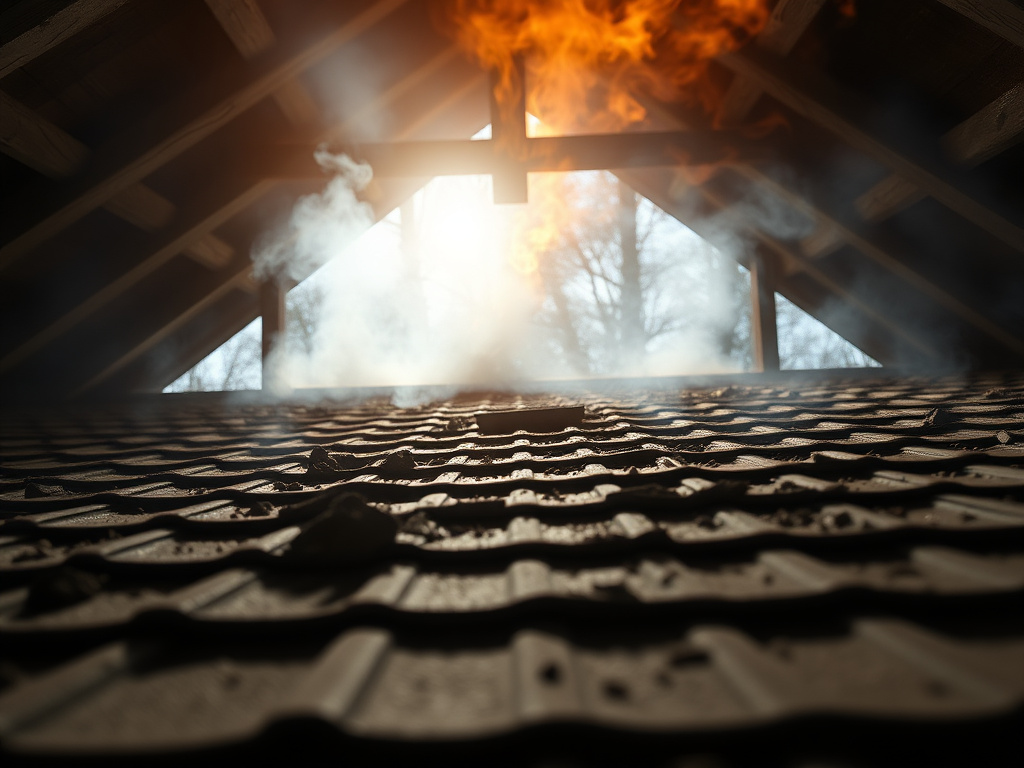
Walk into a Queen Creek attic at 3:00 p.m. on a July afternoon and you'll understand the problem in about four seconds — right before you want to climb back down the ladder. It's not warm up there. It's not even "hot" the way a car left in the sun is hot. It's an oven, and a fairly literal one: East Valley attics regularly hit 140°F to 160°F at roof-deck level during peak summer, sometimes higher on a dark composition-shingle roof with poor ventilation. That heat doesn't stay politely up in the rafters. It pushes down through your ceiling, into your second floor, into your ductwork, and straight into your monthly SRP or APS bill.
If you've ever stood in an upstairs bedroom in August and felt like the air conditioner simply isn't winning, you weren't imagining it. You were feeling attic heat gain in real time. This guide explains exactly why Queen Creek attics get this hot, why so many homes in San Tan Valley, Gilbert, Chandler, Mesa, and the rest of the East Valley never really stood a chance with the insulation they were built with, and what actually fixes it — service by service, so you know what you're looking at when you start getting quotes.
Radiant heat vs. conductive heat: the difference that matters
Most homeowners think of heat moving into a house the way cold moves into a house in a northern climate — slowly, through walls, like a draft. In the Arizona desert, the dominant mechanism is different, and understanding it is the key to understanding why your attic gets so brutally hot.
Radiant heat: the roof deck absorbs and re-emits solar energy
Arizona gets some of the most intense, most direct solar radiation in the country — 300+ sunny days a year, with a summer sun angle that hits Queen Creek roofs almost straight on for hours at a stretch. Your roof deck (the plywood or OSB sheathing under the shingles or tile) absorbs that radiant energy all day long. A dark asphalt shingle roof can reach 160-180°F on its outer surface on a 110°F day. That heat conducts through the roofing material into the wood deck, and the hot deck then re-radiates that heat downward into the attic cavity as infrared energy — the same physical process as a heat lamp. This is radiant heat gain, and in a desert climate it is the single biggest driver of attic temperature.
Conductive heat: the attic floor passes it into your living space
Once the attic air and the underside of the roof deck are that hot, heat conducts downward through whatever is on your attic floor — insulation, ductwork, the drywall ceiling of your second floor — into your conditioned living space. This is conductive heat transfer, and it's the mechanism your attic insulation is specifically rated to resist. The catch is that insulation resists conduction; it does very little against radiant heat on its own. That's an important distinction, because it's exactly why a radiant barrier and traditional insulation solve two different parts of the same problem, and why the best-performing Queen Creek attics usually use both.
Why Queen Creek and East Valley attics specifically run this hot
Every hot-climate city deals with some version of this problem, but a few things stack up specifically against Queen Creek, San Tan Valley, and the surrounding growth corridor:
- Long, intense summers. Queen Creek routinely sees 100+ days a year above 100°F, with many stretches above 110°F — far more cumulative solar load on a roof deck than almost anywhere else in the country.
- Low humidity, high solar intensity. Dry desert air lets more direct solar radiation reach the roof surface instead of being scattered or absorbed by atmospheric moisture, so roof-deck temperatures run hotter than in humid climates at the same air temperature.
- Dark or aging roofing materials. Composition shingle is common across the East Valley's newer subdivisions, and darker shingle colors absorb more radiant energy than they reflect.
- Rapid new-home growth with mixed build quality. Queen Creek and San Tan Valley have seen explosive new construction over the past decade; insulation and ventilation quality on production-built homes varies more than buyers expect.
- Older East Valley stock with settled insulation. In Mesa, Chandler, and Gilbert especially, plenty of homes are 15-30+ years old, with original attic insulation that has compacted, shifted, or simply never met today's recommended levels.
Put those together and you get the number that surprises almost every new homeowner the first time they check: a Queen Creek attic on a 108°F day commonly sits between 140°F and 160°F at the roof deck, and can push past that on a dark-roofed home with poor ventilation. That's not a defect — it's just what happens when intense desert sun meets a roof. The real question is how much of that heat makes it into your living space, and that comes down almost entirely to your insulation, air sealing, and ventilation.
How old, settled, or inadequate insulation fails in the desert
Insulation doesn't fail all at once — it fails gradually, in ways that are easy to miss until your cooling bill or an uncomfortable upstairs bedroom forces the issue. A few of the most common failure patterns we see across Queen Creek, San Tan Valley, and Gilbert attics:
- Settling and compaction. Loose-fill fiberglass and cellulose lose loft over years, meaning the same material now covers your attic floor at a lower depth — and lower depth means lower R-value, even though it looks like there's still "insulation up there."
- Gaps and thin spots. Batt insulation installed quickly during a production-home build often has compression around trusses, gaps at the eaves, and missing coverage around can lights, ducts, and the attic hatch — every one of those is a direct path for heat.
- Underbuilt to old code. Homes built to insulation codes from 10-20+ years ago frequently sit well below today's Climate Zone 2 recommendations, because the code minimum itself has risen.
- No air sealing underneath the insulation. Insulation slows conductive heat transfer, but it does nothing to stop hot attic air from leaking directly into your living space through top-plate gaps, can-light housings, and duct penetrations. A well-insulated but unsealed attic still underperforms badly.
- Contamination and damage. Rodent activity, dust intrusion, and monsoon-related roof leaks are common in older East Valley homes and can compromise insulation's effectiveness even when depth looks adequate.
This is why two homes with what looks like "the same amount" of attic insulation can perform completely differently. What matters isn't just whether insulation is present — it's the R-value it's actually delivering today, whether the attic floor is air-sealed underneath it, and whether the attic is ventilating correctly.
R-value, explained simply
R-value measures a material's resistance to conductive heat flow — higher R-value means heat has a harder time moving through it. It's not a mystery number engineers invented to confuse homeowners; it's a straightforward way to compare how well different thicknesses and types of insulation slow heat transfer.
For Queen Creek and the rest of the East Valley, we're in Climate Zone 2 — a hot-dry desert zone. Code minimum for attic insulation in Zone 2 is R-38. We recommend R-49 or higher for most homes, because the sheer volume of radiant heat hitting an Arizona roof deck all summer means the code minimum leaves real performance on the table. Going from R-19 or R-30 (common in older or settled attics) up to R-49 is a dramatic, noticeable jump — it's the difference between an attic floor that barely slows the heat and one that meaningfully blocks it before it reaches your ceiling drywall.
One nuance worth understanding: R-value has diminishing returns. Going from R-19 to R-49 is transformative. Going from R-49 to R-70 barely moves the needle. That's why we don't chase the highest number possible — we get your attic to the right target for our climate, then put additional budget toward air sealing and radiant heat control, which deliver more real-world comfort per dollar once you're at a solid R-value baseline.
Air sealing and ventilation: the half of the story insulation alone can't fix
Insulation resists conduction. It does not stop air movement. A Queen Creek attic that's full of gaps around can lights, the attic hatch, plumbing stacks, electrical penetrations, and top plates will keep leaking scorching attic air directly into your living space no matter how much insulation you pile on top. Air sealing those penetrations before adding or upgrading insulation is what makes the insulation actually perform to its rated value — it's the step that's easy to skip and expensive to skip.
Ventilation is the other half. A properly ventilated attic — intake at the soffits, exhaust at the ridge or through roof vents — allows superheated attic air to escape rather than building up and radiating downward all afternoon and into the evening. Poor ventilation traps heat, extends the hours your AC has to fight it, and can shorten the life of your roofing material. Insulation, air sealing, and ventilation work together; a strong attic system gets all three right, not just one.
Every service, and the specific job it does
Here's how each of our services fits into solving the attic-heat problem — because "get more insulation" isn't always the right answer on its own.
Spray Foam Insulation
Spray foam insulates and air-seals in a single application, expanding to fill every gap and penetration. For homes fighting serious heat infiltration — especially at the roofline, in vaulted ceiling cavities, or in garages converted to living space — spray foam delivers the highest R-value per inch and closes the air-leak pathways that loose-fill and batt products can't touch on their own.
Blown-In Insulation
For a standard attic floor, blown-in loose-fill is the fast, cost-effective way to bring an under-insulated or settled attic up to R-38-R-49+. It's blown through a hose to flow evenly around trusses, wiring, and obstructions, which means far fewer gaps than hand-placed batts — ideal for topping off older Queen Creek and San Tan Valley homes without a full tear-out.
Attic Insulation
This is the umbrella service for a full attic assessment and upgrade: measuring your current R-value, air sealing first, then bringing the attic floor up to R-49+ using the right combination of materials for your home. If you only remember one thing from this guide, remember that attic insulation done right always starts with an inspection and air sealing — not just adding more material on top of what's there.
Batt & Roll Insulation
Batts remain a smart, economical choice for open wall framing, garage ceilings, and simple joist bays — particularly in new construction and additions where the framing is exposed and accessible. Correctly installed (cut to fit, no compression, split around wiring) batts deliver reliable R-value at a lower cost per square foot than spray foam.
Insulation Removal & Attic Cleanout
Old, rodent-contaminated, or monsoon-water-damaged insulation isn't something you insulate over — it needs to come out. This is especially common after a roof leak or a rodent issue in older East Valley homes. Removal and a clean, sanitized attic floor come before any new insulation goes in.
Radiant Barrier Installation
This is the Arizona-specific piece most homeowners have never heard of. A radiant barrier is a reflective material installed under the roof deck or across the rafters that reflects radiant heat back out before it ever becomes conductive heat in your attic air. Paired with blown-in or spray foam insulation, a radiant barrier attacks the exact mechanism described earlier in this guide — the roof deck re-radiating solar energy downward — and can meaningfully cut peak attic temperatures on top of what insulation alone achieves.
Garage Insulation
Queen Creek and Gilbert garages routinely hit 120°F+ in summer, and that heat radiates straight into any adjacent living space, plus whatever room sits above the garage. Insulating the garage ceiling, garage attic, and walls (especially for converted garages, workshops, and home gyms) keeps that heat where it belongs — outside.
New Construction Insulation
For builders and homeowners in Queen Creek's and San Tan Valley's ongoing new-construction boom, this is code-compliant, whole-home insulation designed into the build from the start — spray foam, batt, and attic systems coordinated with framing and HVAC, so the home starts its life at R-49+ instead of needing an upgrade five years in.
Energy Audits & Rebates
Not sure where your home actually stands? An energy audit measures your current attic R-value, finds air leaks, and identifies the highest-return upgrades for your specific house — and connects the project to available APS and SRP insulation rebates, which can significantly offset the cost of the work.
What Queen Creek attic temperatures actually look like
To put real numbers behind all of this, here's what we typically measure in East Valley attics across a summer day:
- Mid-morning (9-10 a.m.), 90°F outside air temp: attic already climbing past 110°F.
- Early afternoon (1-3 p.m.), 108-112°F outside air temp: attic commonly measuring 140-160°F at roof-deck level on a dark composition-shingle roof.
- Late afternoon (4-6 p.m.), outside air temp beginning to drop: poorly ventilated attics stay elevated well after the sun has passed its peak, continuing to push heat into the ceiling for hours.
- Well-insulated, well-ventilated, radiant-barrier-equipped attic on the same day: roof deck still gets hot, but the attic floor and ceiling drywall run noticeably cooler, and the difference shows up directly in how hard the AC has to run.
That last comparison is the whole point. You can't stop a Queen Creek roof deck from getting hot in July — that's just desert physics. What you can control is how much of that heat actually makes it into your living space and your cooling bill, and that comes down to insulation depth, air sealing, ventilation, and whether a radiant barrier is doing its job before the heat even becomes conductive.
Getting your attic under control
If your upstairs never quite cools down, your SRP or APS bill spikes every July, or you've simply never had anyone actually check what R-value is sitting in your attic, the fix usually isn't complicated — it's just specific to your home. A real assessment tells you exactly where you're losing performance: insulation depth, air-leak locations, ventilation, and whether a radiant barrier makes sense for your roof type.
QueenCreekInsulation.com handles the whole picture for East Valley homeowners — attic insulation, spray foam, blown-in, radiant barrier, garage insulation, removal, and the APS/SRP rebate paperwork that can bring the cost down. We serve Queen Creek, San Tan Valley, Gilbert, Chandler, Mesa, Sun Lakes, Coolidge, and Florence. If your attic feels like it's fighting you every summer, call 844-967-5247 for a free assessment and we'll tell you exactly what's happening up there and what it takes to fix it.
Frequently asked questions
On a typical 105-110°F July afternoon, a Queen Creek attic commonly measures 140-160°F at roof-deck level, especially on a dark composition-shingle roof with limited ventilation. That heat radiates and conducts downward into your living space and ductwork all afternoon and into the evening.
Insulation slows conductive heat transfer, but it doesn't stop air leakage or reflect radiant heat on its own. The best results come from combining adequate attic insulation (R-49+), air sealing at penetrations and the attic hatch, proper ventilation, and often a radiant barrier — each one solves a different part of the heat-gain problem.
Ready for a free quote?
Tell us about your home and we'll build a clear quote — rebates included.